Các chương trình khuyến mãi New88 nhận được rất nhiều sự quan tâm của các tay cược. Những ưu đãi này cực dễ dàng tham gia nhưng lại mang đến cho các tay cược nhiều giải thưởng hấp dẫn. Cùng chúng tôi điểm qua những khuyến mãi tiêu biểu cũng như nắm bắt các điều kiện cần thiết để không bỏ lỡ chương trình ưu đãi này.
Điều kiện nhận khuyến mãi New88 có những gì?
Tham gia các chương trình ưu đãi tại nhà cái New88 anh em cần phải đảm bảo đầy đủ những điều kiện như sau:
- Để có thể săn được các chương trình của New88 anh em cần phải thực hiện hoàn tất các bước đăng ký tài khoản thành viên theo đúng yêu cầu.
- Người chơi phải đảm bảo tuân thủ những điều kiện và quy định đặt ra cho từng chiến dịch. Bao gồm các nội dung như: Số vòng cược tối thiểu, cược bắt buộc, doanh thu bắt buộc…
- Đủ điều kiện tham gia khuyến mãi New88 anh em cần phải thực hiện bước nạp tiền vào tài khoản tài khoản cá cược trên nhà cái. Số tiền cũng như hình thức nạp sẽ còn tùy vào nội dung của chiến dịch.
- Thời gian của mỗi chương trình là hoàn toàn khác nhau vì vậy các thành viên cần phải cập nhật thông tin đầy đủ tại trang web của nhà cái.
Những chương trình khuyến mãi New88 nổi bật
Là một trong những nhà cái nổi tiếng với tài chính hùng hậu, New88 không ngần ngại tung ra các chương trình hấp dẫn cho toàn thể người chơi tại đúng đường link https://new88.to/ có thể kể đến như:
Khuyến mãi New88 hấp dẫn khi thực hiện giao dịch nạp tiền
Khi thực hiện giao dịch nạp tiền tại nhà cái ngoài khoản tiền đã nạp được cộng vào tài khoản cá cược. Người chơi còn có cơ hội tham gia các chương trình ưu đãi hấp dẫn khác như:
- Khuyến mãi độc quyền dành riêng cho newbie khi nạp tiền thành công có cơ hội nhận lì xì cực khủng sau 1 vòng cược. Ngoài ra, khi đăng ký đủ 3 ngày còn có cơ hội nhận tiền thưởng lên đến 888K.
- Tặng 10% cho giao dịch nạp tiền đầu tiên mỗi ngày. Để có thể nhận được chương trình này anh em cần lưu ý doanh thu cần phải đạt 70% đối với các sảnh game: nổ hũ, game bài, bắn cá thì mới được tính là thành viên. Và khuyến mãi New88 không áp dụng cho các ngày 09, 19, 29 hàng tháng.
- Tặng thưởng lên đến 8.888K cho tân binh và ưu đãi này sẽ không được áp dụng cho sảnh game xổ số.
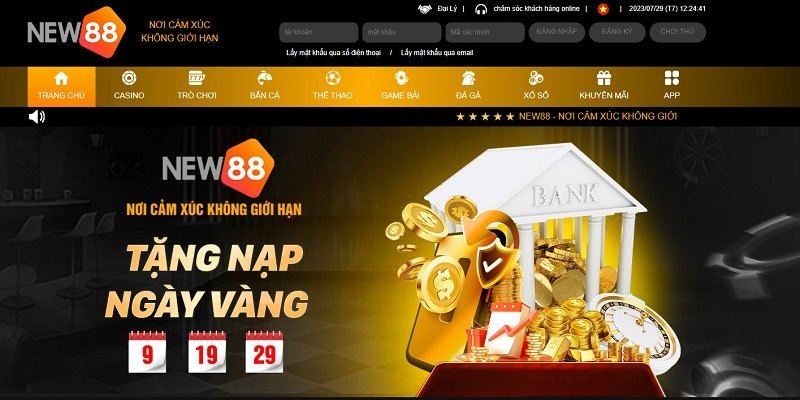
- Tặng 5% nạp đầu vào ngày vàng 09 – 19 – 29 và người chơi không được áp dụng chung với các chương trình khuyến mãi khác.
Các khuyến mãi siêu hot đang nhận được sự quan tâm khủng

Những chương trình khuyến mãi New88 đang được nhiều anh em săn đón nhất phải kể đến:
- Chương trình ưu đãi tri khách hàng với 5000 code thưởng được tung ra mỗi ngày.
- Đăng ký tài khoản thành công nhận ngay 58K khuyến mãi.
- Người chơi còn có thể nhận combo tri ân lên đến 1.500K khi có lịch sử nạp tiền từ 5 lần trở lên.
- Khuyến mãi New88 cực chất khi người chơi chỉ cần đăng nhập sảnh game mỗi ngày đều có cơ hội nhận hồng bao lớn.
- Chương trình ưu đãi sinh nhật cho toàn thể thành viên có giá trị lên đến 28,888K.
Khuyến mãi siêu khủng cho từng sảnh cược tại New88
Ngoài các chương trình áp dụng cho toàn thể người chơi, nhà cái còn tung ra vô vàn khuyến mãi siêu khủng cho từng sảnh game. Trong đó không thể bỏ qua các ưu đãi sau đây:
- Cược cực hăng thưởng cực căng tại sảnh nổ hũ với giá trị giải thưởng lên đến 58,888K.
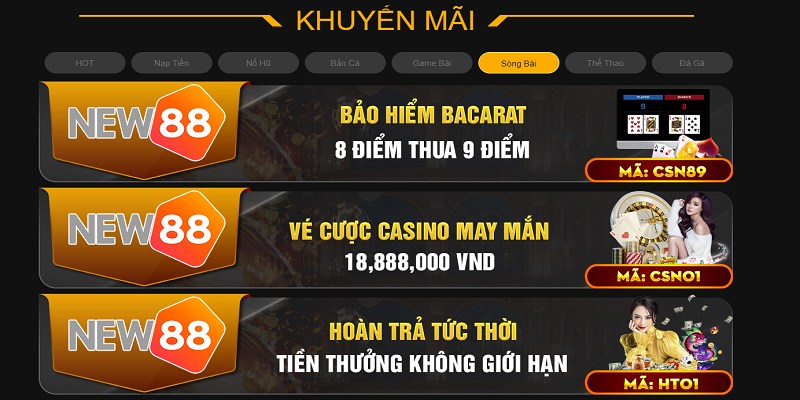
- Sảnh Casino với chương trình vé cược may mắn với với giá trị nhận được 18,888K. Một lưu ý cho người chơi là chương trình này chỉ áp dụng trong ngày do đó cần đảm bảo các vé cược còn hiệu lực khi tham gia.
- Bảo hiểm thắng thua cho anh em tham gia cá cược thể thao với mức hoàn cao nhất có thể đạt 16,888K.
- Bảo hiểm hoàn cược cho các sảnh game: Bắn cá, đá gà, nổ hũ, game bài áp dụng cho người chơi có số điểm thua trong ngày từ 500 điểm.
Hướng dẫn anh em nhận khuyến mãi New88 nhanh chóng
Tham gia vào các chương trình này anh em cần phải thực hiện qua các bước sau đây:
- Bước 1: Nhanh chóng truy cập theo đường link new88 cho trước để vào trang chủ nhà cái và tiến hành đăng ký tài khoản. Điền đầy đủ và chính xác thông tin được yêu cầu từ nhà cái. Khi đã được xác minh tài khoản hãy quay lại trang chủ và tiến hành đăng nhập.
- Bước 2 Trên thanh menu bấm chọn “Khuyến mãi” và một cửa sổ với đầy đủ các chương trình, điều kiện và quy trình tham gia được sổ ra. Anh em chỉ cần chọn ưu đãi mà mình muốn tham gia.
- Bước 3 Đọc kỹ các yêu cầu của chương trình để đảm bảo được rằng người chơi có thể đáp ứng tham gia hay không. Đối với các khuyến mãi cần phải nạp đầu và số vòng cược tối thiểu tham gia thì anh em cần thực hiện đầy đủ.
Kết luận
Trên đây là những chương trình khuyến mãi New88 cũng như điều kiện mà người chơi cần đáp ứng khi tham gia. Với đa dạng các ưu đãi hấp dẫn như này thì anh em còn cần chần chờ gì mà không đăng ký để có thể mang về nhiều giải thưởng có giá trị.